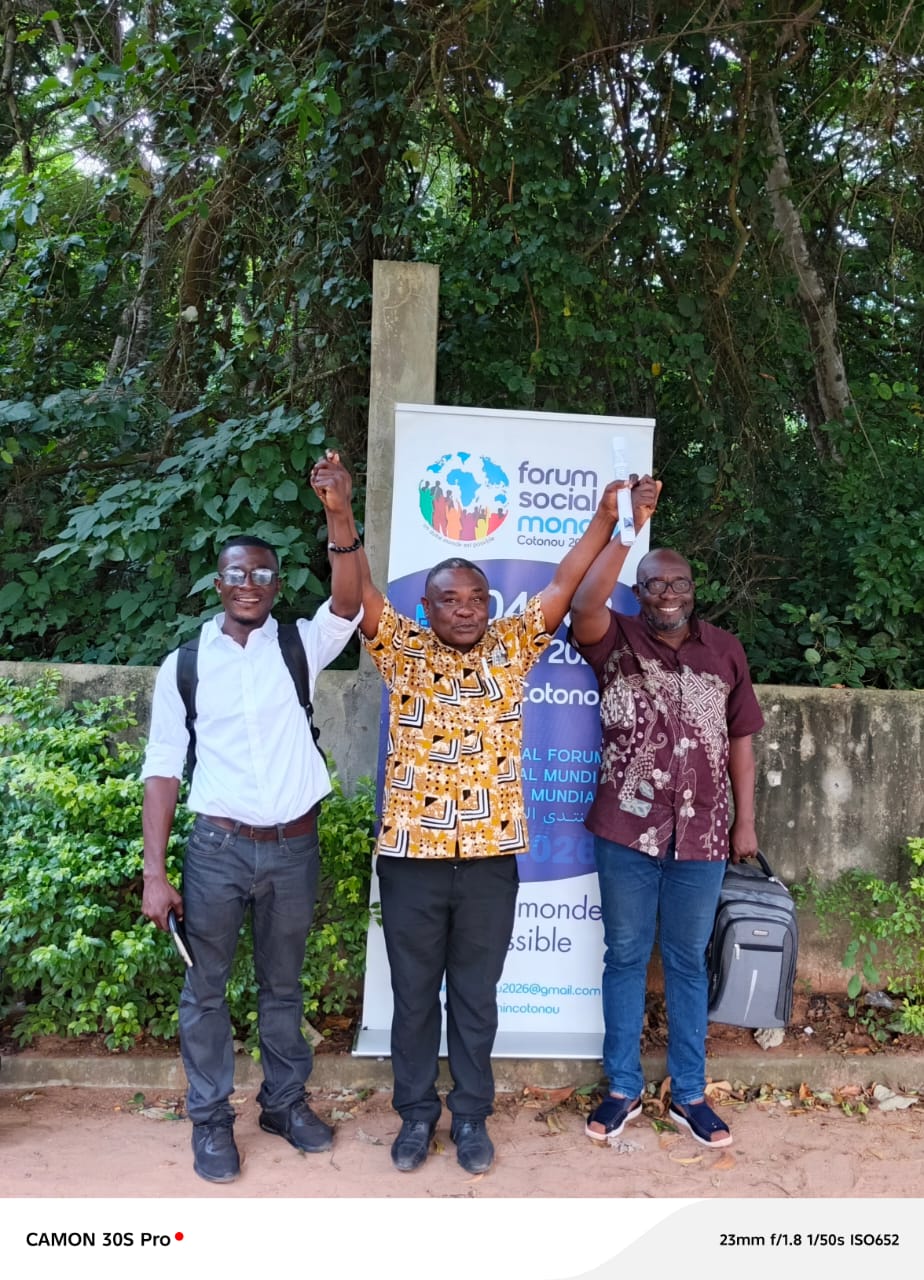
The World Social Forum (WSF), which took place in Benin in August 2026 marks another feat for Africa and the global south, when it comes to collective action and voice on alternative development proposals.
The gathering presents the platform to ventilate the grievances and woes of the oppressed and marginalized people and communities. Prior to August event 2026 event, Senegal and Mali hosted such similar WSF gathering within the last decades in a remarkable way.
How ever, same cannot be said about Benin as it dented the event by nearly torpedoing its realization, though eventually took place ending on August 8, 2026.
To the Chagrin of every one and the World, the Beninois government, at the last-minute took an opposite stance, disallowing the WSF to hold as planned. This manifested in border closures leading to a sudden return of the teeming citizens and groups across Africa, Latin America, Asia Canada etc. other had to take temporal refuge in neighboring countries, while those that earlier arrived inside Benin became frustrated. The situation was unacceptable.
Consistent talks and negotiations including raised voices from peoples held sway. At last, the event went on but in a somewhat diluted mode as the steam for participation had already been watered down. Choosing Benin as the host ground in Africa could not be for nothing. Benin stands tall in the narrative of the trans-Atlantic slave trade. This in addition to its role in Pan-African culture and related contemporary energies, qualify Benin as a good conversation grounds on the ills of historical injustices and reform seeking agendas, affirmed in concept of reclamation and repair. These feed into the emerging Reparative Justice blowing wind.
For the information for those unaware, the UN in March 2026 declared, the trans-Atlantic slave trade as one of the greatest crimes against humanity, calling on member countries to engage in Reparative Justice conversations. Whether the Beninois government was listening to other voices external to Africa is only a reasonable guess but probably a thing for another day. Albeit the, Benin eventually did what has to be done, allowing the event to hold makes it better non.
The Centre for Environmental Justice -Togo and other Oilwatch Africa (OWA) participants at the WSF found some respite as the event became an avenue to consolidate their long held alternative development policy advocacy – Repairing harms and ensuring ecological justice through substitution of fossil energy with renewables, that is consistent with human and environmental security. At the WSF, OWA and ally groups shared critical perspectives on the dangers held in emerging climate focused initiatives citing Energy Transiting and Carbon Marketing, suggesting that factors require deeper attention without which the systemic impositions, associated with the mainstream capitalist order will continue to fester. For instance, a paper, Climate Response and Reparative Justice: Walking on a tight Rope represent one of the channels to reach out to many. Other avenues used were presentations, speeches and solidarity actions of various kinds. A repetition of the Benin incident must be a thing of the past.
Photos